1915-2015: Abergele & District Commemorations: Gordon Gray Hill

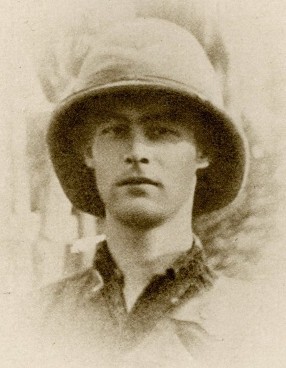
Private 67, Gordon Gray Hill, Singapore Volunteer Rifles, died (possibly from malaria), 16 July 1915. Plot 37. F. 13., Kranji War Cemetery, Singapore. Originally buried at Bididari Christian Cemetery, Singapore, under an earth mound. Not commemorated in the Abergele district.

?????????????????????????????????????????????????????????

Born Didsbury, Manchester, 30 August 1888. Son of James and Christina Gray Hill, of Glandŵr, Pensarn, and later of Sherrards, Welwyn, Hertfordshire. Educated at Winchester College 1902-1907 and St. John’s College, Oxford.

Gordon’s father, James, was a Manchester Cotton Merchant who shipped goods from and between China, Japan and India. Gordon, after Oxford, had worked in his father’s offices for two years before moving to Singapore as part of the business. He was living and working in Singapore when war broke out.

On the outbreak of war he immediately volunteered in the Singapore Rifles. He took part in repressing a mutiny among native troops early in 1915 and was subsequently detailed to perform guard duties at various places round Singapore. While stationed at Labrador, on the western point of the city of Singapore, in early July 1915 he caught a severe chill.

An ‘In Memoriam’ carried by The Times on 16 July 1918 stated that he died “very suddenly, from heart failure, following pneumonia contracted while on active service…In life, loving much, he was much beloved, and in death deeply mourned”.

At the time of his death The Times carried a slightly different, cause of death: “in Singapore from acute malarial fever contracted while on active service…only and dearly loved son of Christina and James Gray Hill of Manchester and Glandwr, Abergele’.

His grave carries the epitaph, “I have loved thee with an everlasting love therefore with loving kindness have I drawn thee. In memory of the dearly loved only son of James and Christina Gray Hill of Sherrards, Welwyn, Hetrs.

1915-2015: Abergele & District Commemorations: William Stewart Turner

Lieutenant William Stewart Turner, ‘D’ Company, 1/10th (Liverpool Scottish) Battalion, King’s (Liverpool Regiment), 9th Brigade, 3rd Division. Killed in action, 16 June 1915, aged 32, First Battle of Bellewaarde. No known grave. Commemorated on the Ypres (Menin Gate) Memorial. Not commemorated in the Abergele district. Commemorated on Garston Civic Memorial, Liverpool Cricket & Rugby Club War Memorial, SS Matthew & James’ Church War Memorial, Mossley Hill and Sefton Park Presbyterian Church War Memorial.

Brother of Second Lieutenant Frederick Harding Turner. Born 19 March 1883, the son of William Neil and Jessie Turner. William was a principal partner in the Liverpool printing firm of Turner & Dunnett of Fenwick Street. He owned a second home, Bronwendon, in Llanddulas for a number of years until shortly before the war (today this is the building to the right of the entrance to Bron-y-Wendon holiday park on Wern Road). Consequently his two sons, Frederick and William, spent some time in Llanddulas when not away at school and they became quite well known in the area.

Turner W S 3

William went to Greenbank school and, like his brother Frederick, he was a keen sportsman. After leaving Sedburgh school in 1901 he went straight into his father’s printing business rather than attend university. He was a good all-round cricketer and Rugby three-quarter back; he played both games regularly for Liverpool, and was Captain of the Liverpool Rugby team in the season 1909-10. He was a member also of the Lancashire County Cricket Club, the Birkenhead Park Football Club, the Old Sedberghians, and the Northern Nomads.

He enlisted into his brother’s territorial battalion in Liverpool, initially as Private 3475, aged 32, on 31 August 1914, and he received a commission as Second Lieutenant 17 November. His brother, Fred, wrote to him asking when he would be coming out to join him. Sadly, as William later wrote, “alas, it will not be on earth“. He was still in England when news of his brother’s death came through. He was present at his brother’s memorial service at Sefton Park Church and the following day, 20 January 1915, he set off from Blackpool with the first reinforcement draft for the 1/10th battalion. A mere thirteen days after the death of his younger brother, William Stewart Turner set foot in France, and made his way to the battalion.

The arrival of the reinforcements must have been a huge relief to the beleaguered 1/10th Battalion.

Owing to its reduced strength it was necessary to send practically the whole Battalion into the line to hold the front allotted to it by Brigade. Inter-company reliefs were carried out to avoid leaving the same men too long in the worst places but the strain on all was severe and it was with very genuine feelings of thankfulness that the first draft of four officers (2nd Lieuts. G. K. Cowan, L. G. Wall, W. Turner and C. Dunlop) and 302 other ranks was welcomed on 30 January. The draft was distributed amongst the companies, the men being allotted as far as possible to the companies of which they had been members at Tunbridge Wells, and they very quickly settled down to the routine of trench-warfare.” [A. M. McGilchrist, ‘The Liverpool Scottish, 1900-1919’]

As things transpired he was to literally fill his brother’s place. Frederick had been such a popular officer that when the men of his platoon heard that William was on the way they handed in a petition that he should command them. He was promoted to full Lieutenant in May 1915.

As a result of the Second Battle of Ypres, which had closed down on 25 May 1915, the German trenches between the Menin Road and the Ypres-Roulers railway formed a salient. Behind the salient lay the Bellewaarde Ridge. The ridge gave the Germans excellent observation over the new British lines.

Early in June it was decided to attack the salient, and, if possible, gain possession of the ridge; the attack was to be carried out by the 9th Brigade of the 3rd Division….There were three phases in the attack on Bellewaarde….in the third phase was the south-western corner of Bellewaarde Lake…As soon as the first objective had been gained the guns were to bombard the second objective…about the centre of this line lay Bellewaarde Farm. The 1st Lincolns and Liverpool Scottish (1/10th King’s Regiment), who during the first phase, were to move up to the front line vacated by the troops of the first phase,  were to capture the third objective.” [E. Wyrall, ‘History of the King’s Regiment (Liverpool) 1914-1919’]

In essence therefore, the 1/10th battalion, in conjunction with the 1st Lincolns, were to follow up the initial attacks and then pass through captured and held objectives to seize the objective line, behind an artillery barrage that would lift and move forward to target enemy positions and assist the attacking troops. Preparations were swiftly under way.

From the 10th to the 15th June the Batt’n was busily engaged in training for an operation to take place on the 16th, particular attention being given to bombing. On the evening of the 14th June Major A.S. Anderson proceeded to Railway Wood from which point the 9th Brigade were to attack on the morning of the 16th. He took with him 2 men per Company to act as markers and also 2 Cyclists. At 4 pm on the afternoon of the 15th the Battalion left the camping ground near Busseboom and proceeded via Ypres to Railway Wood.” [1/10th (Scottish) Battalion War Diary]

The 1/10th arrived at their attack positions during darkness and waited for the battle to begin. The Germans had however figured out that something was brewing and shortly after midnight began shelling British positions. There was little that William and the rest of his battalion could do other than sit it out and hope. A number of 1/10th became casualties. At 2.10 a.m. the British guns joined in. The King’s (Liverpool) Regiment’s historian graphically recorded the effects.

The opposing trenches were from 150 to 300 yards apart, and as the Divisional Artillery poured shell on to the German front line, clods of earth, heads and bodies of men shot up into the air, the guns were making excellent shooting. For two hours the bombardment went on, and then, precisely at 4.15 a.m., two companies of each of the attacking battalions left their trenches and moved as quickly as possible across No Mans Land.” [E. Wyrall, ‘History of the King’s Regiment (Liverpool) 1914-1919’]

During the darkness, despite the shelling, small British patrols had moved into No Man’s Land to clear ‘friendly’ barbed wire entanglements so that the attack would not be impeded. The British artillery fire also caused enough damage to the German wire that, as a result, the attack moved forward swiftly and the first German trench line was captured relatively easily.

There, amidst the debris, they found many dead and wounded Germans. Others, who had escaped wounds, held up their hands and surrendered, too demoralised and dazed to offer any resistance. Consolidation of the trenches was begun immediately.” [E. Wyrall, ‘History of the King’s Regiment (Liverpool) 1914-1919’]

It was now the turn of the 1/10th Liverpool and 1st Lincolns to move forward and beyond the captured German trenches towards the second line. All seemed to be going perfectly to plan, as the Liverpool Scottish and the Lincolns swiftly took possession of the second German trench line and immediately began moving towards the Germans third line. However, it was now that the clockwork precision began to falter.

Communications in the Great War, especially in these relatively early stages, were a major problem. Without radio communications, coordinating an attack with artillery support was monumentally difficult. Once a fire plan had been set it was very hard to alter it, and certainly not swiftly. However, in case it was needed on this occasion, the 1/10th had a set of red and yellow flags to plant in the ground to indicate progress. As good an idea as this was, it relied on artillery observers being able to see and interpret them and then pass accurate messages to the big guns. For whatever reason, the coloured flags proved inadequate and, as a result the British guns stuck to the prearranged fire plan. It was thus that the 1/10th began attacking into territory being bombarded by their own guns which were not getting the message to lift and move on. In addition, of course, German guns were pounding the area.

The whole area was also under very heavy shell-fire from the enemy’s artillery, bombing attacks and counter-attacks were everywhere going on and there was a great deal of hand-to-hand fighting in which both sides lost heavily.” [E. Wyrall, ‘History of the King’s Regiment (Liverpool) 1914-1919’]

The 1/10th had no option but to withdraw and fall back to the previously captured second line of German trenches at about 9.30 a.m. which they subsequently held until nightfall. Lieutenant Leslie Wall provided his own version of the day’s events.

Our artillery bombardment started at 2.10am and carried out the work of demolition so successfully that little difficulty was experienced in taking the first and second line trenches. Unfortunately however in continuing the advance we suffered many casualties as, owing to the difficulty experienced in observing signals, it was impossible to keep our shells ahead of the advancing infantry. Although the 3rd Line German Trenches were reached it was impossible to hold on to them and so the whole Brigade consolidated the 1st and part of the 2nd Line German trenches, manning them until 11.30 pm on the night of the 16th at which hour they were relieved by the 8th Brigade. The casualties amongst our Officers were particularly heavy and of the 24 Officers who went up only Lieutenant Wall, 2nd Lieutenant T.G. Roddick and Lieutenant Chavasse came back unscathed. The work of all ranks throughout the day calls forth the highest praise, our bombing parties doing particularly good work. The stretcher bearers throughout a most trying day did excellent work and showed great courage in attending to so many wounded under very heavy shell fire.” [1/10th (Scottish) Battalion War Diary]

Overall, in terms of its objectives, the attack had been successful. Two lines of German trenches had been gained, the salient reduced, and 1,000 yards gained. In other ways it had not been a success. A chance to take a third line had been lost due to communication problems (which would dog the armies of all sides for some time yet), and casualties had been high. The 1/10th alone had lost 21 Officers and 379 men killed, wounded or missing.

It is unclear in which phase of the attack William was killed. However, we know that he was in or around one of the captured German trenches in the vicinity of Bellewaarde Farm, and most likely the third German line, when a shell exploded very near to him and Sergeant John Blake Jones. Both were killed instantly. Neither of their bodies have a known grave, and William’s name is inscribed on the imposing Menin Gate memorial in Ypres, Belgium. Sergeant Jones had been a witness to Lieut. Fred Turner’s death six months earlier, and was the Sergeant he was talking with before being sniped.

At William’s memorial service at Sefton Park Church, the Rev. Alexander Connell said:

Lieut. Turner, with his quiet and modest ways, his unassuming but steadfast character, his filial devotion, his brotherly fidelity, his patient faithfulness to duty, and his unaffected sincerities, alike in time of peace and in the sterner tasks of war, might elude the casual eye at first through his very lack of pretension and the self-forgetfulness of his bearing and disposition. Yet this man played a hero’s part. He stepped without fuss, and at once, into his fallen brother’s place. He won the affection and confidence of his men. Some of them, who have also fallen, had sworn, as we know, that for his sake, as for his brother’s, if any hour of peril called them they should be found by his side, living or dead. I know of no greater tribute, I know of no more enduring monument to his name than this enthusiasm of loyalty and trust which he earned from men who knew him through some of the severest tests that can befall the fibre and the temper of a human soul.”  [I am very grateful to Joe Devereux for providing this quote, and for further information about W S Turner.]

1915-2015: Abergele & District Commemorations: Neville Lewis

Private 2368 Neville Lewis, B Company, 1/5th Battalion, Manchester Regiment, 127th Brigade, 42nd (East Lancashire) Division. Killed in action 27 May 1915, aged 22. No known grave, Panel 158 to 170, Helles Memorial, Gallipoli Peninsula, Turkey. Commemorated on Abergele War Memorial andAbergele Town Memorial.

Son of Edward and Elizabeth A. Lewis, of Strathmore, St. George’s Road, Abergele, and the proprietors of The Gwindy Hotel (the family was a well known local family and the ‘Lewis Bro’s’ tailors ghost sign can still be seen high on the wall of the building adjacent to Y Gwindy).  Born Hawarden, enlisted Wigan, early September 1914, lived Gwindy Hotel, Abergele. Initially served with 6th Battalion, Manchester Regiment, with a home address of the Gwindy Hotel. He landed in Gallipoli on 6 May 1915 and was killed exactly three weeks later. His younger brother, Henry John Bernard Lewis, also served.

Although Neville Lewis has no known grave, he was buried initially. Private Alf Austin of Pensarn, who also initially served in the 6th Manchester’s with Neville, wrote home in September 1915 that Neville’s grave had been found and that “the Abergele boys out there” planned to erect a suitable memorial. One can only assume that this was never done, or that subsequently the memorial marker was removed or lost following the evacuation from Gallipoli at the end of the year.

Lewis, Neville (9) resized


1915-2015: Abergele & District Commemorations: Joseph Davies

Private 11069 Joseph Davies, 1st Royal Welsh Fusiliers, 22nd Brigade, 7th Division. Killed in action 16 May 1915, Battle of Festubert, aged 27. No known grave, Panel 13 and 14, Le Touret Memorial, Le Touret Military Cemetery, Pas de Calais, France. Commemorated on Abergele War Memorial, Abergele Town War Memorial and Rhyl War Memorial.

Son of Walter and Alice Davies, of 5, Rhuddlan Rd., Abergele. Born Llanrhaeadr, lived in Abergele, and enlisted in Rhyl. Joseph was a noted long distance runner having won many prizes in competitions before the war. The family had moved to Abergele c.1893. They had 14 children, of whom 11 were still living by 1911. From the 1911 Census they were (with ages of 1911): Walter (25), Joseph (23), Charles (21), John (19), Margaret Elizabeth (17), Eliza Emma (15), Sophia (11), Robert (9), William Edward (6), Ivor (3). The missing name is that of Isaac Morris Davies, a professional soldier who was serving in India in 1911, age unknown, and who lived at 33, Peel Street. Isaac and the 4 oldest boys, Walter, Joseph, Charles and John, all served. Charles and John would both become Prisoners of War, with John becoming famous for escaping from his German prison camp in December 1916 and making it home to a hero’s welcome (the subject of a future article).

Joseph had formerly served as a professional soldier and was called up from the reserve when war broke out. He arrived in France 11 December 1914 as a 1st Battalion reinforcement and was soon followed by three of his brothers, all of whom were serving by January 1915 when Joseph was reported to be temporarily ill in a hospital at Le Havre. Official notification of Joseph’s death was received by his father in the first week of June 1915.

The account below, of the events of the day that Joseph died at Festubert, is written by my friend the Reverend Clive Hughes and reproduced with his kind permission.

The unit mustered 25 Officers 806 men in the trenches that morning, Following a half-hour bombardment the unit attacked just after it ended at 3:16am, going over the top in successive order of the 4 companies, 2 waves of men per company. Their aim (within the larger battle) was to take 2 lines of enemy trenches then hold a defensive position. It met heavy shell and machine-gun fire even as it left the trenches and tried to cross No Mans Land. They got beyond the two enemy lines but came under fire from their left, and part of the battalion (A & part of B companies) was mixed up with the 2nd Scots Guards on that flank. The rear two companies (C & D) also suffered badly in crossing to the German lines. As some men pressed on further they were hit by “friendly” shellfire and halted.

By 1pm contact was made with the Royal Warwicks Regiment on the right and The Queen’s Regiment came up in support. The battalion found itself holding an exposed position facing an orchard, open to enemy sniping from front and rear. At 2pm the enemy began shelling the trench they were in, which offered little cover. Reinforcements from the 7th London regiment came up and attacked the orchard covered by fire from the Royal Welsh Fusiliers (RWF), but had to fall back under machine-gun fire. The shelling meantime wrecked the trench and cut the RWF off from other units. Darkness was approaching as the RWF fell back to a line being held just in front of the former Second German Line; then were ordered to withdraw to trenches being held by The Queen’s, which they accomplished successfully.

The RWF claimed to have penetrated the enemy defences to a depth of 1200 yards. For this they paid a heavy price: Officers- 6 killed, 2 died of wounds, 9 wounded, 1 wounded & missing, 1 missing. Total 19 out of 25. Other Ranks- 118 Killed, 271 wounded, 164 missing (many of whom would prove to be dead), 6 wounded and missing. Total 559 out of 806. Some 110 bodies were collected and buried in the old No Mans Land on 18th May, in addition to various officers brought in the previous evening.

1915-2015: Abergele & District Commemorations: William Henry Hartley Higgin

Private 9031 William Henry Hartley Higgin, 2nd Battalion, Royal Welsh Fusiliers, 19th Brigade, 6th Division. Died of natural causes 11 May 1915, aged 29. Screen Wall. O1. 203, Leicester (Welford Road) Cemetery, United Kingdom. Not commemorated in the Abergele district. Son of Henry and Elizabeth Higgin, of Hey Brook, Rochdale. Born Rochdale, enlisted Abergele, lived Prestatyn. An original member of the 2nd Battalion, William arrived in France on 1 September 1914. The nature of the illness that resulted in his death in May 1915 is unknown.

1915-2015: Abergele & District Commemorations: Francis Rubenstein Linekar

Rifleman 1914 Francis (Frank) Rubenstein Linekar, A Company, 1/6th Battalion (Rifles), King’s (Liverpool) Regiment, 15th Brigade, 5th Division. Killed in action 5 May 1915, aged 20. No known grave, Panel 4 and 6, Ypres (Menin Gate) Memorial, Ypres, Belgium. Not commemorated in the Abergele district, but commemorated on the Abergele County School War Memorial, Colwyn Bay War Memorial and Hoylake and West Kirby Memorial.

Born Colwyn Bay. A former pupil at Abergele County School. Son of Lucy Mary Linekar, of Waverley House, Hoylake, Birkenhead, and the late Thomas J. Linekar (died 1918), of Bryn Deryn, Colwyn Bay and of Colwyn Bay Council. Enlistment address given as Hoylake, Cheshire. Enlisted Liverpool.

Francis Linekar, better known as Frank, was born in Colwyn Bay in 1895. His father, Thomas Joseph Linekar, was a Professor of Music and was providing his services as a Music teacher. His mother, Lucy, was also a teacher prior to marriage. Francis had one older brother, John Clarence Linekar, who also served before being discharged with a Silver War Badge. In 1901 the family were living at Sea Forth, Colwyn Bay. By 1911 the family had moved to Bryn Deryn, Queens Park, Colwyn Bay. Thomas was no longer teaching music and was employed as an accountant for the gas department of the Abergele Urban District Council. John had left home and Francis was aged 16 and attending Abergele County School.

Frank enlisted in Liverpool shortly after the outbreak of war into the 6th King’s (Liverpool) Regiment, known as the Rifles. He volunteered to serve overseas and therefore became part of the original 1/6th battalion that landed at Le Havre 25 February 1915.
Frank would probably have seen action at the Second Battle of Ypres, the Battle of Gravenstafel fought 22-23 April, and the Battle of St Julien fought between 24 April and 5 May 1915. It was here that Frank was probably killed.

A memorial plaque in Holy Trinity Church, Hoylake reads:
To the dear memory of Francis Lancelot Farnall and of his cousin and comrade Francis R Linekar who gave their lives for their country in the Great War. This window is dedicated by their parents.

1915-2015: Abergele & District Commemorations: John Davies

Private 9094, John Davies, 2nd Battalion, Cheshire Regiment, 84th Brigade, 28th Division. Died of wounds 2 May 1915, Second Battle of Ypres, aged 24. Buried plot II. L. 6., Poperinghe Old Military Cemetery, Belgium. Commemorated on Abergele War Memorial, Abergele Town War Memorial, Rhyl War Memorial.

Son of John and Alice Davies, of 1, Fronhyfrd, Groes Lwyd, Abergele. Born at Rhyl, enlisted Chester. Brother of Allen Davies (killed in action 30 October 1914, though it may be recalled that when news arrived in Abergele of John’s death in May 1915 his younger brother Allen was still listed as missing – see below).

John Davies was a professional soldier, having enlisted in 1908. He arrived in France as an original member of the 2nd Cheshire’s on 16 January 1915. According to a casualty report he bled to death within ten minutes of his wounding, a detail that his father found by accident whilst looking at casualty lists printed in a newspaper.


1915-2015: Abergele & District Commemorations: Harry Oswald Amos

Private 1056 Harry Oswald Amos, 11th Battalion (B Company) 3rd Brigade, 1st Division, Australian Imperial Force. Died of wounds 26/04/1915 (though this officially, and incorrectly, recorded as 29/04/1915). Harry has no known grave (he was buried at sea) and he is commemorated on Panel 33, Lone Pine Memorial, Gallipoli, Turkey. He is not commemorated in the Abergele district., but is commemorated on the Rhyl War Memorial.

Harry Amos was born in Rhyl, the son of Samuel John & Ann Amos of 7, Bath Street, Rhyl (7, Belle Vue Terrace, Rhyl, after the war) and he attended Abergele County School. He was living in Western Australia at the outbreak of war and he was possibly one of a number of local men who, together, set out to create a new life in Western Australia.

About four years ago a large party of Welsh Patagonians, natives of the Abergele district, were entertained by an Abergele resident, and accorded a public reception in that town on their visit thereto, en route for Western Australia, where they intended to found a new Welsh colony in the Moora District. This move from continent to continent was in the nature of an experiment. For forty years and over the Cymry have peopled the extensive territories of the Gaiman, and have become sick of the oppressive rule of the Argentinian authorities. It was, therefore, decided to seek a new home under British rule, and Western Australia was chosen for experimental purposes.

[Welsh Coast Pioneer, 29 October 1914. One of the leaders of the group was Tom Owen of Abergele. One of his sons joined the Australian Army and he was in Abergele in October 1916, on leave following a wounding. In total nine men from Abergele and the district served in Australian forces having settled there prior to the outbreak of war in 1914, and four of them would give their lives: Harry Oswald Amos died of wounds (26/04/1915), Edward (Ted) Davies, David Saxon Evans, Herbert Wynne Walton Evans (killed in action 16/07/1918), Albert Alex Gilchrist (died 08/05/1916), Edward Evans Parry, Richard William Rowlands, Ernest George Hewlett Stacey (died, 15/05/1916)]

Harry enlisted into the Australian Army on 14 September 1914 at Blackboy Hill, Western Australia, a military training camp used to train and house large numbers of Australian Imperial Force (AIF) troops. He was 24 years old, 5′ 8″ tall, weighing 9 and a 1/2 stones, with dark hair and blue eyes, a Methodist, unmarried and a Draper. He listed his mother, Anne, of Rhyl, as his next of kin.

By late 1914 the war on the Western Front had become a stalemate. Some Allied politicians and commanders were hopeful that the Russians on the Eastern Front could do more, thus attracting German soldiers from the Western Front and providing an opportunity for a breakthrough. However Russian efforts to date had been largely disastrous and its army was clearly under equipped. If Russia were to mount a successful series of offensives it would need supplies from their western allies, Britain and France. However overland trade routes were blocked leaving supply by sea as the only viable option. Numerous sea routes existed, but by far the best was the entrance to the Black Sea through the Dardanelles. This was controlled by the Ottoman Empire which the Allies had declared war against in November 1914. Therefore the straits had been closed and in November the Turks began to mine the waterway. It was then that Winston Churchill, First Lord of the Admiralty, proposed a naval attack on the Dardanelles. Unwilling to redirect modern warships and the much feted ‘Dreadnoughts’ from the North Sea area, Churchill opted to use a large number of the more obsolete battleships that would be a match for anything the Turks could muster against them. The proposal was strengthened on 2 January 1915 when Grand Duke Nicholas of Russia appealed to Britain for assistance against the Ottomans, who were conducting an offensive in the Caucasus. In mid-February 1915 naval attacks on the Dardanelles began when a strong Anglo-French task force began bombarding Ottoman gun positions along the coast. By 25 February the outer forts had been destroyed and the entrance to the straits cleared of mines. However, the Turks had many mobile gun batteries which easily evaded the Allied bombardments and threatened the minesweepers sent in to clear the straits. On 18 March 1915, the main attack to force the straits was launched with a fleet of 18 battleships with numerous cruisers and destroyers. The French battleship Bouvet was sunk by a mine and two more French battleships were damaged. HMS Irresistible and HMS Inflexible were critically damaged by mines. HMS Ocean, sent to rescue the Irresistible, was also damaged, and both ships eventually sank. The attack had run into a recently laid belt of mines and failed. It was now accepted that a naval campaign alone could not force the straits. The land either side would need to be taken to clear it of enemy artillery and allow the minesweepers in. Thus, planning for a land campaign began.

The Gallipoli land campaign is too great a story to recount here. However, in short, Australian troops en-route to the Western Front were earmarked for the assault along with several British and French Divisions. Amongst the AIF forces was 1st Division and Harry Amos. Harry had left Australia aboard H.M.A.T Ascanius from Freemantle on 2 November 1914. His 1st Division had arrived in Egypt by February 1915 and in March Harry’s 3rd Brigade was stationed in Lemnos. On 1 April 1915 orders to prepare an amphibious assault on Gallipoli were received. Training for the attack began. 3rd Brigade, containing 11th Battalion and Harry Amos, would be in the spearhead.

The ANZAC’s (Australia and New Zealand Army Corps) would land near Gaba Tepe on the Aegean coast, from where they could advance across the peninsula, cutting off the Ottoman troops, in what was a secondary attack to back up the main landings at Cape Helles. The small area in and around which they would land has became known as “Anzac Cove”. Following a postponement due to weather, the ANZAC’s came ashore on 25 April 1915.

Two Divisions of the ANZAC Corps landed over 1 kilometre north of their planned objective and in the darkness and confusion of the early morning faced rugged and difficult country. Units mixed up on their arrival rushed inland and became separated from the main force, which came under growing fire from the Turkish defenders. While Turkish reinforcements arrived, the Anzac position became increasingly precarious as the assaulting force failed to secure their initial objectives. Falling back on improvised and shallow entrenchments the Anzacs held on for a crucial first night. By that first evening 16,000 men had been landed; of those over 2,000 Australians had been killed or wounded.

[‘The Landing at Anzac Cove’, Australian War Memorial, www.awm.gov.au ]

Harry was one of the wounded. Immediately he was evacuated to one of the boats acting as floating hospitals, H.M.T.S City of Benares, where he was diagnosed by a Doctor of the 1st Field Ambulance as having “a penetrating wound to the abdomen“. There is some confusion as to exactly when he died. In light of the vicious and somewhat chaotic atmosphere of the landings, and the huge number of casualties, this is perhaps understandable. In his service records held at the Australian archives there are records that state that the date of death was unknown but placed it between 25 April and 1 May. In a later (and erroneous), letter to his mother, the Australian authorities stated 9 April, some two weeks before the ANZAC landings had taken place. A date of 29 April was eventually settled upon for official purposes, this being the day when he was buried at sea from on board H.M.T. Seang Choo. However, the single document to have survived from 1st Field Ambulance on board H.M.T.S City of Benares, states clearly that he died the next day, 26 April, at 1.30 p.m. One can only assume that his body was removed to H.M.T. Seang Choo at some later point, from which he was offered to the Mediterranean on 29 April, the date that became accepted as the date of death.

His personal possessions returned home to his mother in Rhyl in February 1916 amounted to nothing more than a purse containing 3 coins, his identity disc, an ash tray and some letters.

The Gallipoli campaign is deeply embedded in the Australian psyche. Each year commemorations of a nature similar to our Remembrance Day are held on 25 April: ANZAC Day. The campaign, which ultimately failed in its objective of opening the Dardanelles to allied shipping, was closed down in December 1915. By the end it had cost Australia 26,111 casualties, of whom 8,141 died.

Very many of Abergele’s territorial soldiers would also experience the Gallipoli campaign and it would provide the town and district with its darkest day of the war, 10th August 1915, and these events will be described in full in time for the centenary.

1915-2015: Abergele & District Commemorations: Frank Sydney Beckett

Private 2577 Frank Sydney Beckett, 2/8th Battalion, The Sherwood Foresters (Nottinghamshire & Derbyshire) Regiment, 2nd Notts. & Derby Brigade, 2nd North Midland Division. Died of pneumonia, 5 March 1915, aged 21.

Frank is buried in Plot I. 2. 75., St. George Churchyard. He is commemorated on Abergele Town War Memorial as S. Beckett (but not the Abergele War Memorial), St. George War Memorial (which spells his name incorrectly) and Bodelwyddan War Memorial.

Frank Sydney, more commonly known by his middle name, was the son of Sarah Ann and George Horner Beckett. George was head gardener at Kinmel Park and originated from Nottinghamshire. In 1912, at the age of 18 in 1912, Sydney moved from St. George to Mansfield, Nottinghamshire. He took up lodgings at 105, Union Street, Mansfield, and was employed as a railway clerk.

The 8th Battalion, Sherwood Foresters, based in Worksop, were a territorial battalion that, like all territorial battalions on the outbreak of war, began dividing into a 1/8th (first line) Battalion and a 2/8th (second line) Battalion. This was completed in Newark on 11 September 1914. The first line contained men who had volunteered to serve overseas if required whereas the second line were men that would serve as home defence forces. Sydney volunteered for the 1/8th in Mansfield on 21 September 1914. The 1/8th, following mobilisation, had moved to Harpenden for training and this is where where Sydney caught up with his new comrades. In November 1914 it moved to Braintree in Essex. By February 1915 the battalion was ready for overseas service and on 24 February 1915  the battalion began shipping out to France.

On that very day Sydney was posted away from the 1/8th Battalion to the 2/8th Battalion due to illness, though he would never complete the transfer. He had caught a chill following a night attack training exercise near Braintree a few days earlier. The chill had turned to pneumonia and he was hospitalised. He died in the 1st Eastern General Hospital at Cambridge at 2.15 p.m. on 5 March.

His body was returned home and the funeral took place at St. George on Monday 8 March 1915. He was accorded full military honours, with bearers supplied from the recently completed army training base known as Kinmel Camp. A 21 gun salute was fired in the air as the coffin was lowered.

The Beckett family grave in St. George. Frank Sydney is entitled to a war grave headstone from the Commonwealth War Graves Commission though this has never been supplied. If any descendants see this article and feel that the provision of a war grave headstone would be appropriate please make contact for details of how this can be achieved.

Kinmel Camp appeal for information

Here’s an appeal which initially arrived at this site as a comment. It’s from author Jerry whose email address is jedbone at talktalk ot net. If you can help Jerry, please feel free to contact him directly, and leave a comment if you’d like to share what you know with other readers.

Here’s what Jerry wrote:

“I’ve been carrying out research for the last two years on Kinmel camp, mainly relating to its construction and layout of the camp during the Great War..

“I have several plans from 1938 onwards and a sketch of the camp from Julian Putkowskis book on the riots. I have also spoken to Julian about the camp.

“I’m currently trying to locate a plan of the camp during the Great War and have looked in every conceivable place locally and out of the area, including, National archives, McAlpines, local authority, council, libraries,records offices, IWM, MOD, highways, Cadw, CPA, National library of wales, Lidle collection, Royal Engineers museum, WFA, Canada, Kinmel Camp, etc, etc..

“Would anyone have an idea where else to look?

“I’m also trying to locate photos of the camp, its buildings and the men who served there and would kindly ask if anyone has photos of relatives. If so, would it please be possible to have a copy of them..

“This is part of a large project which hopefully culmunate in a memorial site to those who served there.”