1916-2016: Abergele & District Commemorations: John Robert Davies

Private 15470, John Robert Davies, 10th Battalion, 76th Brigade, 3rd Division. Died of Wounds, 20 February 1916, aged 23. Buried Plot IV. D. 13A. Lijssenthoek Military Cemetery, Belgium. Not commemorated in the Abergele district, but commemorated on the Llanfairfechan War Memorial. The inscription on his headstone reads: Y peth yr wif fi yn ei wneuthur ni wyddost ti yr awrhon, Ioan XIII.7 (You do not realize now what I am doing, but later you will understand).

Born in Llanddulas, the son of John and Ann Davies who both died whilst he was young. In 1901 he was living with his grandparents at 17, New Street Abergele. By 1911 he had become the adopted son of his Aunt, Sarah Jones, of Washington House, Llanfairfechan.

As an original volunteer member of the 10th Battalion, Royal Welsh Fusiliers, John had arrived in France, at Boulogne, 27 September 1915. Until December 1915 the battalion’s experience had been one of routine periods in the front line trenches, south of Ypres, and periods of rest in rear area billets. It was during the battalion’s third stretch in the trenches that Richard Maurice Evans, the battalions first Abergele casualty, had been killed.

The battalion returned to the trenches 17 December 1915 until Christmas Eve and, as before, daily casualties from occasional shelling and the ever-present German snipers were incurred. That stint cost 4 men killed, 14 wounded and a further 4 who died of wounds. The steady erosion of the battalion through the attrition of trench warfare led to the battalion receiving it’s first batch of reinforcements from the 3rd (Reserve) RWF battalion at this time.

On New Year’s Eve, 10th RWF returned to the trenches. Over the next few weeks the usual rotation between being in and out of the trenches continued, and the usual casualties were incurred. January saw 4 men killed, 18 wounded, a further 3 who died of their wounds and 1 sent home as physically unable to continue.

The start of February saw the battalion less frequently in the line as a period of movement and relocation followed. However, by 15 February they were in Poperinge, Belgium, and the following day returned to the trenches. Sadly, a new Adjutant’s hand had taken to the writing of the battalion war diary. Whereas before it had been very detailed, the entries now become rather vague. All that is noted for 17 February, the day that John was fatally wounded, is that the battalion experienced it’s first major trauma above and beyond the routine casualties of trench warfare, and yet the diary merely names the deaths of two officers, the wounding of 3 others and then blandly states “other ranks – 18 killed and 35 wounded” . The following day is little different: “casualties – other ranks 6 killed and 6 wounded” . The following day, 19 February 1915, the battalion were relieved from the trenches.

What exactly had happened? Following a period of rest the 10th Royal Welsh Fusiliers re-entered the front line trenches north-east of St. Eloi, Belgium, on 16 February 1916. The trenches they inherited were old and in poor condition. At 5.30 a.m. on the 17th a furious German artillery bombardment began falling on the battalion’s part of the front line. Over the next half an hour there was little that the men could do other than ride the storm and hope for the best. Casualties were heavy. Eighteen men were killed and 35 wounded. Amongst the wounded were two local men, John Robert Davies, who died three days later 20 February 1916, and Hugh Thomas Davies. The two Abergele and district men are buried in the same grave.

Llaethdai Abergele dairies and commercial milk producers

Gyda diolch i Gwynn Williams, yn enedigol o Lanefydd, wedi byw yn Abergele a bellach yn Rhyl.

Here’s a list from from local singer, actor and historian Gwynn Williams showing how many farms, outlets and dairy companies sold milk in Abergele in the first half of the 20th Century:

Glan Llyn – Williams
Ty Mawr
Pen Llyn
Bryn Gwyn
Bowdon House – William Jones
Fern Bank
Siamber Wen
Tim Roberts
Jenkins
Hylas Dairies – up St George’s Rd
Tan Dderwen – Manners
Bryn Coch – Lewis
Nant Fawr – Edward Jones

I’m grateful to Gwynn for sharing this list.

When I showed this list to local historian Brian Haynes, he added another name an a nice story about :

Farmer Roberts the Weatherman in Pensarn.

Brian says:
“The Royal Welsh Show was held on part of his land. He’d come out of his farm in Pensarn  every day with two half churns balanced on either side of his bike. His weather forecasting ability was second to none. But one day, someone asked him: ‘what’s the weather going to be like today Farmer Roberts?’ and he replied: ‘I don’t know, the battery’s just run out on me radio!'”

Brian printed a set of maps and ringed the commercial dairy outlets listed by Gwynn. Here’s a detail:

Some of the dairies which used to be up St George's Rd, Abergele
Some of the dairies which used to be up St George’s Rd, Abergele


Free video workshop in Rhyl for charities

When I’m not producing the AbergelePost website, one of the things I do is to sit on the Wales advisory panel of the Media Trust and Community Channel’s Do Something Brilliant Cymru / Wales group. Steve Lloyd of DSB is delivering free video photography and editing training for local charities in Rhyl later this year. Here’s his press release with all the details:

“Media Trust and Community Channel are working with Big Lottery Fund on a campaign to celebrate the incredible work of projects across the country.

“Would you like to Do Something Brilliant and get free video production training from Media Trust, the UK’s leading communications charity?

“The introductory workshops are designed to help charities and community groups understand how they can turn their stories into short films and will cover planning, scripting, recording and editing. Each training course is open to a limited number of organisations and up to two people from each organisation.

“There is a free one-day training workshop on Wednesday 13th April at WCVA, Morfa Hall, Rhyl.

“If you would like to find out more, or apply for a place, then please contact: Steve Lloyd, Community Outreach Manager, Cymru / Wales: stevel@mediatrust.org
07972 280830. ”

1915-2015: Abergele & District Commemorations: Richard Maurice Evans

[My sincere apologies to the memory of Maurice that I neglected to post this in time for the centenary of his sacrifice. He is not forgotten.]

Private 15089 Richard Maurice Evans, ‘A’ Company, 10th Battalion, Royal Welsh Fusiliers, 76th Brigade, 3rd Division. Killed in action, 9 December 1915, aged 28. No known grave, but known to have been buried and is commemorated on a Special Memorial in Hedge Row Trench Cemetery, Ypres, Belgium. Not commemorated in the Abergele district.

Known as Maurice. Born Holloway, London, the son of Richard and Anne Elizabeth Evans, of 3, Narrow St., Llanfyllin, Montgomeryshire, but lived at Mountain View, Llanddulas. Enlisted Colwyn Bay in 1914. Gave his residence at that time as Liverpool. Brother of Lance Corporal D. R. Evans of Towyn and Lieutenant J. T. Evans of Pensarn.

Richard Evans senior, formerly a councillor in Montgomeryshire, had moved to Abergele shortly before the outbreak of war. One of his sons, Maurice, had emigrated to Canada c.1911-1912 but returned to join the army shortly after war was declared, enlisting into the Royal Welsh Fusiliers in Colwyn Bay. His brothers, Lance Corporal D. R. Evans, of a territorial battalion of the Royal Welsh Fusiliers, and Second Lieutenant John Thomas Evans, later of the Machine Gun Section, 9th South Wales Borderers, were also early entrants into the war. D. R. Evans was wounded in Gallipoli in the summer of 1915. John Thomas Evans initially joined the 16th Royal Scots but received his officer’s commission in May 1915 and joined the South Wales Borderers. Both returned home from the war.

Maurice was posted to the 10th Battalion, Royal Welsh Fusiliers (10th RWF) which was set up in Wrexham 16 October 1914. It began training its new, enthusiastic recruits at Codford in Wiltshire before shortly moving to Bournemouth. In April 1915 the battalion moved to Romsey and finally, in June 1915, to Aldershot.

Maurice went to France with the battalion 27 September 1915, landing at Boulogne. From there the battalion moved to Belgium and was transferred, with the whole of 76th Brigade, to 3rd Division 10 October 1915. Five days later the battalion moved into the trenches for the first time near Ypres, suffering its first fatality as Private Lawrence Eede was shot through the head by a German sniper. Over the next four days, six more men were hit and wounded by snipers and five by shrapnel, one of whom subsequently died. For many of the citizen soldiers of the 10th RWF, like Maurice Evans, these few days must have provided them with a stark reality of what they had signed up for.

Withdrawn to billets at Eecke for the next few weeks, the battalion was selected to send a detail to Reninghelst to be inspected by the King’s of both Britain and Belgium and the French President on 27 October 1915. But for one man the combined pressures of life at the front and the prospect of an imminent return to the front line must have become too much. On 3 November Colour Sergeant Major Fisher broke up a fracas in which 28 year old Private Charles William Knight “….was firing his rifle indiscriminately inside a billet, and who had already killed a comrade and wounded another” . Found guilty of the murder of 22 year old Private Alfred Edwards of Ruabon, Private Knight was executed by firing squad on 15 November.

The battalion returned to the trenches south of Ypres 21 November 1915 and trench attrition set in once more. A combination of snipers and occasional shelling killed 3 men, wounded 7 and another died of his wounds. That German snipers were active was recorded in the war diary of 27 November: “Two Germans, one of whom had just shot Pte. Owens, were killed by one of our snipers and a sentry respectively”. Nevertheless, the next day Private Thomas Lynch was shot in the head by a sniper and Private Michael Murphy was wounded when shot in the shoulder before the battalion was withdrawn to Dickebusch for rest.

The next tour of the trenches, in the same vicinity as previously, began 4 December. For Maurice, it would be his last time at the front. Unfortunately, the battalion war diary, which up until this point had assiduously recorded casualties, did not note Maurice’s death on 9 December. Whether it was from a sniper or shelling is therefore unclear, but it would most likely have been by one of those causes.

The first news at home of Maurice’s death (whom his parents had not seen for three years since before his emigration) came in a letter from his CO as transcribed below.

“It is with the deepest regret that I have to inform you of the loss of your son, Corporal Maurice Evans. He was killed in action today whilst doing his duty and had a quite painless death at 3 p.m. All his comrades regret his loss very much, and offer you their deepest sympathy. Your son always did his duty well and cheerfully, and I always felt him to be one of my most reliable N.C.O’s. Once more offering you my heartfelt sympathy, believe me to be yours sincerely,
R. A. Adamson,
Capt. O.C., ‘A’ Company”

Although known to have been buried in Hedge Row Trench Cemetery, Ypres, the cemetery suffered very severely from shell fire, and after the Armistice the positions of the individual graves could not be found or reconstructed, thus the precise location of his grave was lost and he is recorded on a special memorial.

Oldham Battalion, Manchester Regiment (circa 1914), at Kinmel Park Barracks

Mike Madden writes:

“I have attached 2 pictures. One of the Oldham Battalion (Pals) Manchester Regiment. And one with my Grandfather’s section, George Madden, seated in the centre of the front row. I think both pictures were taken in 1914 at Kinmel Park Barracks”

 Oldham Battalion (Pals) Manchester Regiment. And one with my Grandfather's section, George Madden, seated in the centre of the front row. I think both pictures were taken in 1914.  Oldham Battalion (Pals) Manchester Regiment. And one with my Grandfather's section, George Madden, seated in the centre of the front row. I think both pictures were taken in 1914.

We’re grateful to Mike for sharing these gems from his family’s collection.

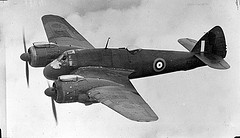
1943 aircrash near Abergele: RAF Beaufighter VIF X8261

Reader Rol Griffith is looking for details of an aircrash near Abergele in 1943. He writes:
“Does anyone one have any information of a RAF Beaufighter VIF X8261 of 406 Sqn(RCAF) based at RAF Valley which flew into the ground at high speed near Abergele after being blinded by searchlights killing the two crew F/Sgt(Pilot)WI Hereford RCAF & Sgt (Nav)JWE Robinson on 7th June 1943. Where did it crash? Any personal memories?”

Please use the comments section on this page if you have anything to share with Rol.

Beaufighter photo
Photo by San Diego Air & Space Museum Archives

Gwrych Castle beachside bathing house Ty Crwn is being auctioned in London

Heather Dalton and Neil Lawless from Beresford Adams Estate agents in Abergele have been in touch with news of the sale of an historic local property at an auction in London with a guide price of £150k this month.

“We are currently marketing a property to go to auction on December 16th, this particular property may be of curiosity to you as it was built as a bathing house for Gwrych Castle. The property is called Ty Crwn and is on Llanddulas Road, Abergele.

“It is advisable that anyone wishing to bid on the property makes contact with Countrywide Property Auctions

DSCF2008

DSCF2044 DSCF2043 DSCF2042 DSCF2012