Britain from Above

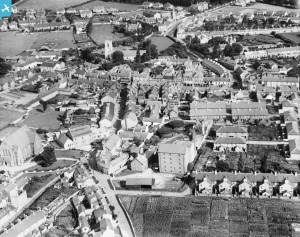
There’s a new website that looks fascinating. It’s the digitised archive of aeriel photos of British towns by the Royal Commission. Here’s a gem from Britain from Above. Notice the allotments (!!) in Parc Gele at the bottom of the picture and the two tanks (grain, coal gas?) at the rear of Chapel Street. Add any other spots to the Comments below please.
Crown Copyright from Britain from Above
Abergele from above. Date not known. Crown Copyright from Britain from Above. Please click on image to see clearer version.

I first discovered the site via this tweet by the Royal Commission: “BRITAIN FROM ABOVE rare & fragile aerial photos from Aerofims Collection conserved, digitised and now available online http://ow.ly/bNtsl”

If you register on the site you can bookmark and comment on favourite images.

This site’s a keeper.

Compare this image with the one on http://abergelepost.com/from-on-high.html

I’ll end this post with a link to more pictures of Abergele from Britain from Above.

Facebook Group: “Abergele People Pictures and it’s history.”

In March 2012, Jayne Jones set up a Facebook group about Abergele people, pictures and its history. Juliette Roberts wrote to me on Friday to let me know about the group which already has 150 members. I’ve only had time to scratch the surface so far but I can already tell it’s a really valuable resource for anyone who’d like to share memories and images of our favourite town. I wish the admins all the best with the group and I’d urge you to go on over, Like it and add your own comments and pics.

Traditional materials

I’m impressed that the contractors putting up the new Gele flood defences are using traditional materials like these round limestone capstones to match the original wall. I was speaking with an old friend and experienced Abergele builder Peter O’Connor this week and he’s about to begin work on the next phase of the defences near Faenol Ave.

Twmffat!

A woman on holiday in a caravan park in Towyn went into Ellesmere’s hardware shop, Abergele, and asked:
“Excuse me, I’d like to buy a tundish”
“A what?” asked shop assistant G., whose first language was Welsh.
“A TUNDISH”
G. excued himself a moment and went to ask Mr Ellesmere in Welsh what a tundish was.
“It’s a bloody twmffat G.!”
“Aaah” sighed G., turning to the woman he said:
“Now why didn’t you say you wanted a bloody twmffat!?”

(more about Ellesmere’s)