Cae Stalwyn, Abergele

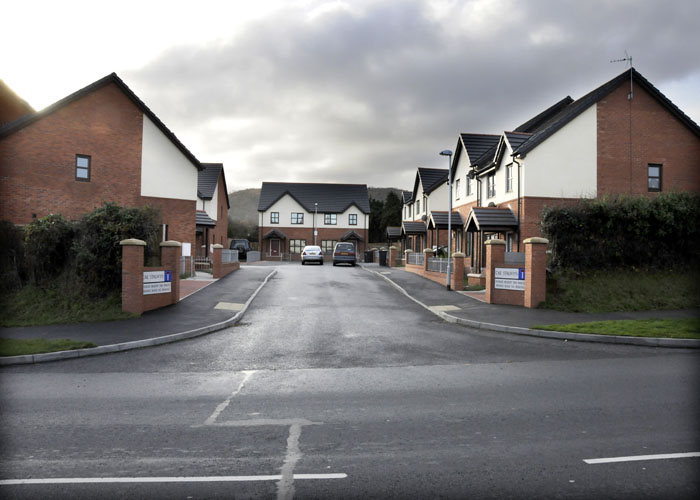
Cae Stalwyn is Welsh for 'stallion's field'. Stâd o dai newydd o'r enw Cae Stalwyn, Ffordd Rhuddlan, Abergele. Llun Sion Jones 2012/3
Cae Stalwyn is Welsh for ‘stallion’s field’. Stâd o dai newydd o’r enw Cae Stalwyn, Ffordd Rhuddlan, Abergele. Llun Sion Jones 2012/3

This relatively new housing estate is called Cae Stalwyn – Welsh for Stallion Field. This is an apt name as the houses were built on the site of the old horse sale field where the stallions were chosen by owners of mares.

Stâd o dai newydd o’r enw Cae Stalwyn, Ffordd Rhuddlan, Abergele.

The Old Abergele Mill

How many of you can remember this old limewashed windmill at the junction of Chapel Street and High Street? These photographs, from Dennis Parr’s collection and reproduced with his  permission, show the old mill before it was demolished.

Abergele Mill. Copyright Dennis Parr.
This is one of  a series of images of Abergele from Dennis Parr’s collection. Mr Parr will be familiar to many who’ve lived in the town since the 1960s. He used to run Parr’s shops in Market St.
We’ll be publishing more images from the Dennis Parr Collection on this site over the coming months.


The ghost signs of Abergele

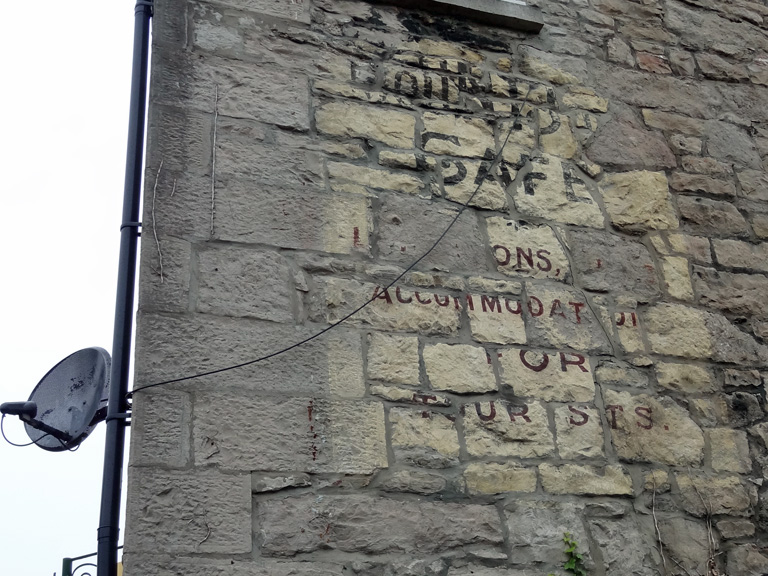
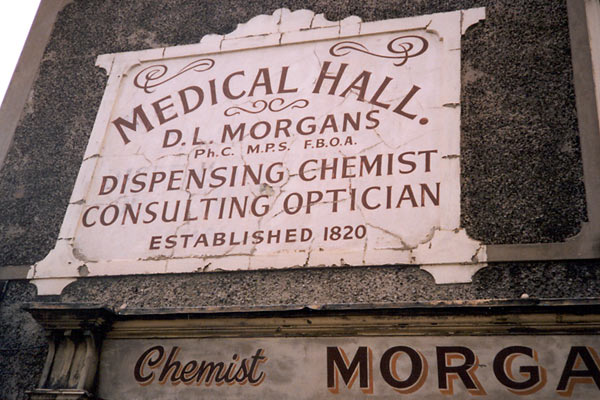
Sam Roberts has had a passion for many years. He runs a website about the ghostsigns in Britain’s towns. He even plots walking tours of places like London where you can look at these signs. These are the old signs which have been forgotten. In response to a special request from Sam on Twitter, here are two plus one which has been painted over here in Abergele, and here they are:

The Mountjoy, photo by Gareth Morlais, AbergelePost.co.uk
The Mountjoy Cafe and Accommodation ghost sign, by the Gele bridge in town in Abergele

Lewis Bros Tailoring ghostsign, photo by Gareth Morlais, AbergelePost.co.uk

Morgan's Medical Hall, photo by Gareth Morlais, AbergelePost.co.uk
Morgan’s Chemist sign. This used to be a ghost sign, until it was painted over, preserving it for longer.

Photo of 1947 Christmas Pantomime at Abergele Sanitorium

I received this fabulous photo from Mrs Gunta Binks. She writes:

“Thought this might be of interest to you, I am going through papers of my late Mother who sadly passed away in September 2014 two weeks short of her 90th birthday.  On the back is written Christmas 1947 Manchester Children’s Abergele Sanatorium, North Wales, Pantomime.  My mother’s name was Erna Darzins (Latvian refugee, who would have been 23 in 1947)) she is the lady at the back right hand side with the lion on her head! She talked fondly of her time in Abergele and no doubt the Welsh air did her good.”

1947 Abergele Sanitorium Pantomime - copyright Gunta Binks. Reproduced with her permission, with thanks.
1947 Abergele Sanitorium Pantomime – copyright Gunta Binks. Reproduced with her permission, with thanks.

The Little Flower of Jesus

This is the name often given to 19th Century French Saint Thérèse de Lisieux, after whom Abergele’s beautiful Catholic church is named.


St Thérèse of Lisieux Church Abergele

Built in Clwyd Avenue and opened in 1934, the architect was an Italian called Signor Dr. Giuseppe Rinvolucri. He also  designed churches in places such as Ludlow and Amlwch and, according to my father,  he lived for quite a while in a house just above Glan Conwy.

“The plan is of a Greek cross, with a dome and round apses.” – http://www.geograph.org.uk/photo/922843

You can read a 1932 news story about the then new church in this web archive of The Tablet: “an impressive setting for the opening ceremonies on Thursday of last week. The procession from the temporary church to the new building was witnessed by a large crowd, and fully five hundred persons formed the congregation.”

This beautiful Church is one of Abergele’s gems.